
Reviving Upland Cultivation through Groundwater Recharging
Sri Lankan small-holder farmers traditionally rely on cascade water systems for irrigation, which support local biodiversity and provide water storage for drought resilience under the ‘Climate Resilient Water, Sustainable Farming & Livelihoods: Strengthening Sri Lankan Farming Families’ Climate Resilience’ funded by Paul Liberman Family Foundation through Green Empowerment. However, these systems have deteriorated over time leading to water scarcity, impacting farmers in the dry zone. This poses a threat to both local communities and national food security too.
This project which commenced in mid-2023, in Kurunegala and Anuradhapura districts, seeks to benefit 2500-5500 community members by improving water access, promoting sustainable agriculture practices, and providing livelihood training. The project encompasses three components: Water and Livelihoods, which includes restoring cascade systems, promoting sustainable agriculture, women-led livelihood opportunities with local produce, and localized weather forecasts for farming decisions; Pilot Program Services, where Green Empowerment and Janathakshan delve deeper into community needs, exploring renewable energy and solutions for farming and food processing; and knowledge sharing
Reviving Upland Cultivation through Groundwater Recharging One of the core principles embedded in the project’s master plan is the exploration of rainwater harvesting to support upland cultivation. To assess the viability of this approach, the project team conducted two exploratory field visits in selected project areas, bringing in the expertise of a water management and engineering specialist.
These field visits focused on understanding farmer behavior in water usage, their awareness and attitudes toward conservation, and the suitability of innovative water management techniques. Detailed field observations revealed that while farmers recognized the urgency of water conservation, practical solutions remained out of reach, until now.
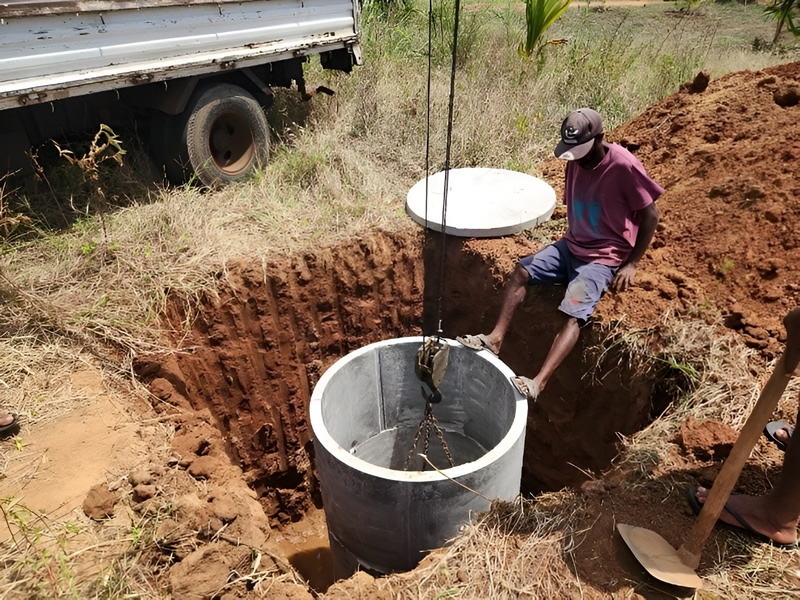
Drawing from the insights and recommendations outlined in a comprehensive technical report, the project implemented a pioneering groundwater recharge technique. Concrete cylinders, measuring 3 feet in diameter and 6 feet deep, were strategically installed across the cultivation lands. To enhance percolation, black stones were layered around each cylinder up to 2 feet in width, creating effective recharge points. On average, three recharge units were installed per acre, forming a robust infrastructure to capture and store rainwater.
The results have been remarkable. Farmers have already begun witnessing tangible outcomes: groundwater levels have visibly risen, and the once-thirsty coconut trees nearby are now flourishing, bearing richer, greener foliage and more fruit.
The land has shown signs of rejuvenation, instilling a renewed sense of hope among farmers for the sustainability of their upland cultivation practices.
This case illustrates how scientific insight, traditional agricultural knowledge, and strategic intervention can converge to solve complex climate challenges. By investing in low-cost, community-driven solutions, Janathakshan is not only improving water availability but also reinforcing long-term agricultural resilience and environmental sustainability.
Through innovations like these, Janathakshan continues to empower rural communities to adapt, thrive, and build a climate-resilient future, one drop at a time.