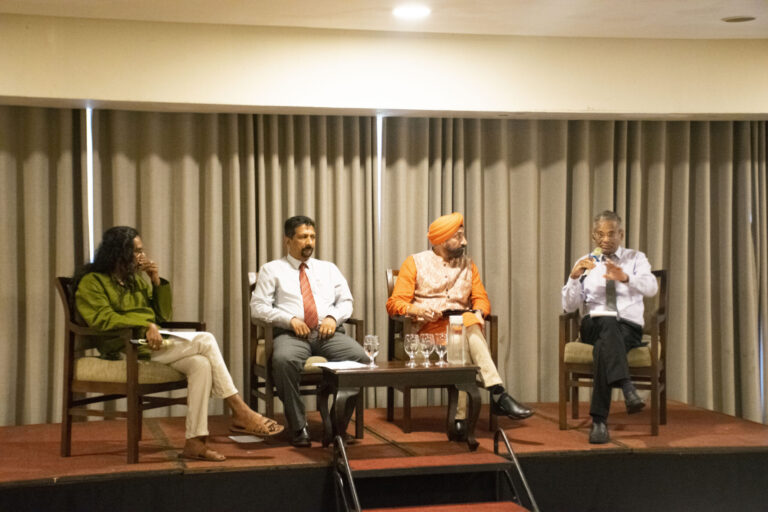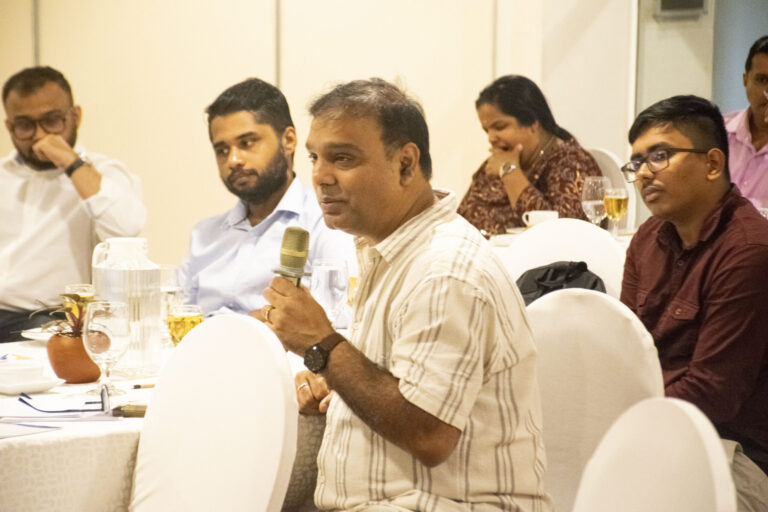
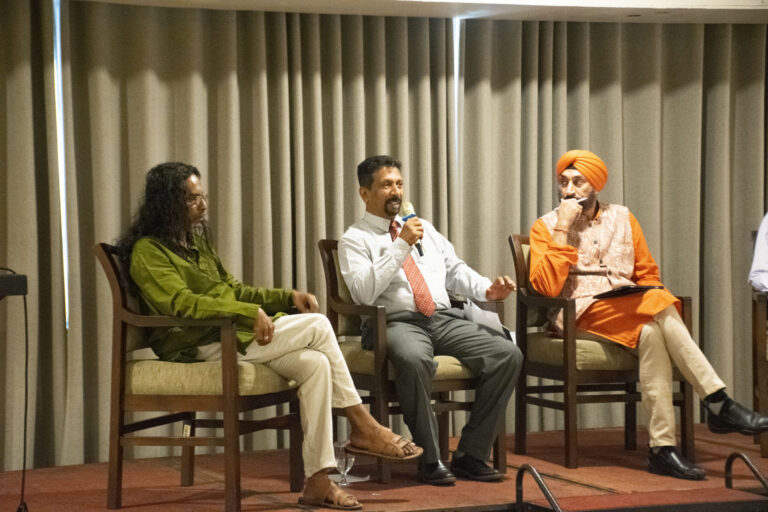
On 12 August 2025, Janathakshan GTE Ltd., in collaboration with the Fossil Fuel Non-Proliferation Treaty Initiative and Climate Action Network South Asia (CANSA), hosted the Sri Lanka Advocacy Dialogue on “Just Transition in Sri Lanka and the Fossil Fuel Treaty: Aligning Climate Justice with Economic Recovery” at Waters Edge Hotel, Battaramulla.
The event brought together policymakers, climate experts, civil society representatives, and youth to discuss how Sri Lanka can move towards a “Just and Equitable Energy Transition’. The dialogue aimed to introduce the Fossil Fuel Non-Proliferation Treaty (FFNPT), a global initiative addressing the root causes of the climate crisis by ending the expansion of fossil fuels and promoting clean, decentralized energy systems.
The session featured opening remarks by Dr. Janaka Hemathilaka, CEO/Executive Director of Janathakshan, followed by a presentation on Sri Lanka’s national context for Just Transition by Ms. Sandini Dheerarathna, Manager – Communications and Marketing, Janathakshan. Mr. Harjeet Singh, Technical Advisor for the FFNPT, highlighted the global progress of the initiative and its potential to support Sri Lanka’s energy and climate ambitions.
A panel discussion moderated by Mr. Arjuna Seneviratne, Co-chair of CANSA Sri Lanka explored pathways for achieving a fair fossil fuel phase-out, with insights from Dr. Sunimal Jayathunga (Secretary, Ministry of Environment), Mr. Nimal Perera (President, Sri Lanka Sustainable Consumption and Production Forum), and Mr. Harjeet Singh, Strategic Advisor to the Fossil Fuel Non-Proliferation Treaty Initiative.
Participants emphasized the importance of reducing fossil fuel dependency, fostering renewable energy investments, and ensuring economic opportunities for workers and communities during the transition. The dialogue underscored how the Treaty complements Sri Lanka’s Nationally Determined Contributions (NDCs) and aligns with national efforts for climate resilience and energy sovereignty.
With growing international momentum behind the Treaty, supported by 17 countries, over 100 subnational governments, and major global institutions, the dialogue served as a significant step in raising awareness and laying the groundwork for future policy advocacy and national endorsement.