As part of the GEF-VII project titled “Partnerships and Innovative Financing to Mainstream Biodiversity and Sustainable Land Management in the Wet Climatic Zone of Sri Lanka,” a multi-day field visit and series of Tea Land Clinic programmes were conducted from 11th to 15th December 2025 across selected locations in Kalutara and Ratnapura districts.
The project is implemented by the Ministry of Environment, in collaboration with the Ministry of Plantation and Community Infrastructure, with technical and financial support from the United Nations Development Programme (UNDP). It aims to promote sustainable land management and biodiversity conservation within tea and rubber landscapes, while improving livelihoods of smallholders through crop diversification and value-chain development.
Responding to Smallholder Needs
During initial field engagements, smallholder tea growers, particularly in the Kalawana landscape, expressed a strong demand for practical guidance on improving land and crop productivity. Key knowledge gaps were identified in soil health management, pest and disease control, cultivar selection, nursery management, and good harvesting and post-harvesting practices.
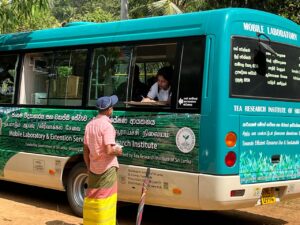
In response, the project’s expert technical consultants recommended a series of Tea Land Clinic programmes, supported by the Tea Research Institute (TRI) mobile laboratory, to deliver hands-on, location-specific technical support.
Tea Land Clinics Across Four District Locations
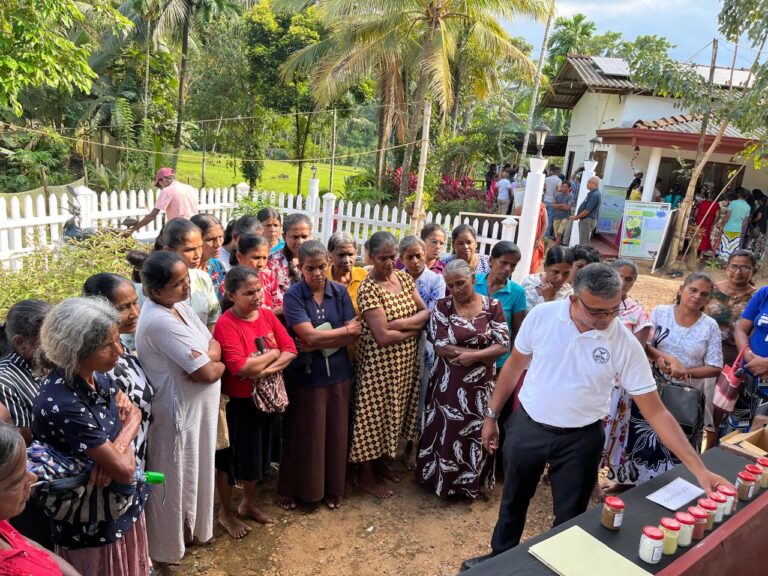
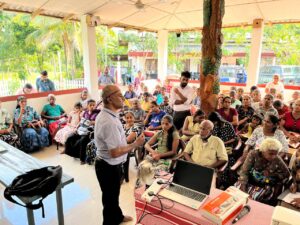
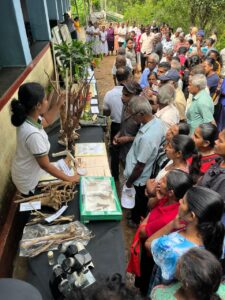
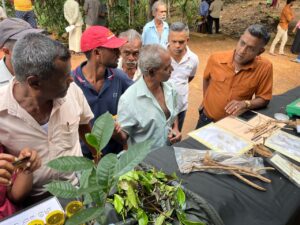
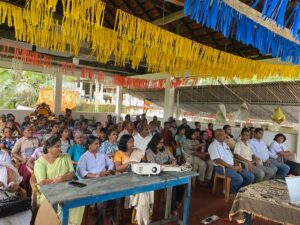
From 12th to 15th December, Tea Land Clinic programmes were conducted in Kelinkanda (Molkawa), Pebotuwa, Nivithigala, Kahawatta, and Hagarangala (Kalawana), reaching over 400 smallholder farmers across multiple sessions.
The programmes were facilitated by a team of experts including sustainable plantation development and land management specialists, TRI resource persons, project staff, and relevant government officers. Technical sessions focused on:
- Soil testing for acidity, organic matter, and nutrients to guide correct fertilizer application
- Identification and management of pests and diseases
- Soil conservation techniques and use of appropriate tea cultivars
- Good harvesting, post-harvesting, and nursery management practices
- Handmade and artisanal tea production for women and youth groups
Youth, Value Chains, and Biodiversity Integration
In parallel, dedicated discussions were held with youth groups and producer communities on future livelihood pathways. These included opportunities in biodiversity surveys, tea tourism, nursery development, youth-led harvesting groups, and Participatory Guarantee System (PGS) certification. The need for further capacity-building support, potentially in collaboration with institutions such as NIPM, was also highlighted.
Engagements with Kithul farmer groups identified key challenges related to safety, value addition, sustainable harvesting, and fuelwood efficiency. Plans were discussed to develop targeted awareness materials to promote sustainable Kithul production and its health benefits.
Looking Ahead
The field visit and Tea Land Clinics demonstrated the value of integrated, field-based technical support in strengthening productivity, resilience, and sustainability within tea landscapes. Insights gathered will inform future interventions under the GEF-VII project, particularly in scaling best practices related to biodiversity conservation, agroforestry models, innovative value chains, and system certification.
The initiative marks an important step toward achieving environmentally sustainable and economically viable tea production systems in Sri Lanka’s wet climatic zone.