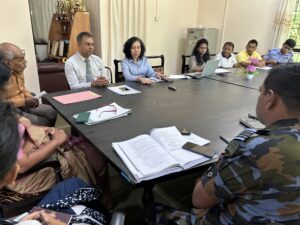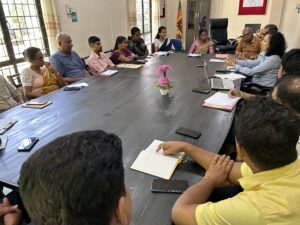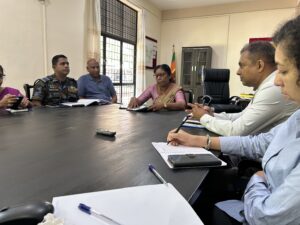
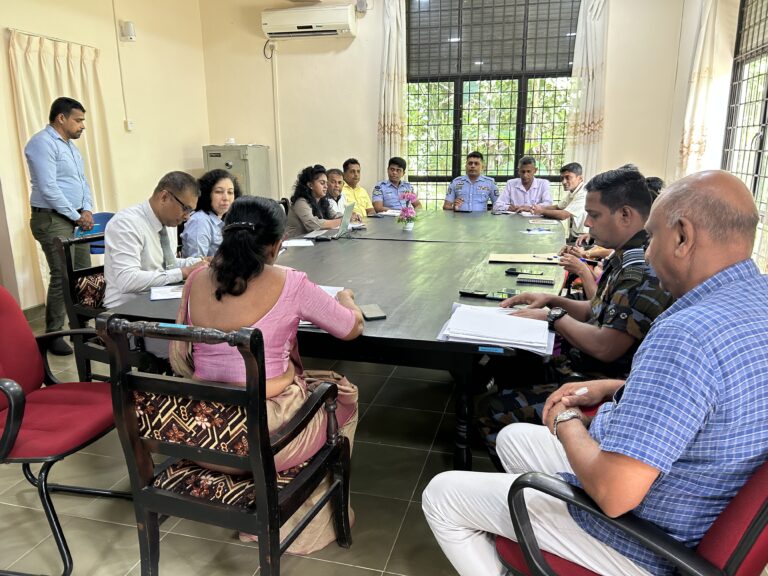
As part of the initial activities under ongoing disaster risk reduction and resilience-building efforts, a coordination meeting was held with the Divisional Secretary (DS) of Walasmulla to formally introduce planned interventions and establish institutional collaboration at the divisional level.
Under the Asian Disaster Readiness Fund (ADRF) – Pillar I, the Sri Lanka Preparedness Partnership (SLPP) is implementing the project titled “Building Resilient Communities through Locally Led Disaster Risk Management Initiatives.” The project focuses on strengthening forecast-based, locally led early warning and early action systems, with particular attention to reaching at-risk last-mile communities.
On 3 June 2025, a coordination meeting was convened at the Walasmulla Divisional Secretariat, bringing together the Divisional Secretary of Walasmulla, officials from the District Disaster Management Coordination Unit (DDMCU), Hambantota, divisional-level stakeholders, relevant government officers, and the project implementation team. The meeting served as a key entry point to engage the Divisional Secretariat, share project objectives, and discuss priority risk areas within the division.
During the discussion, the project team outlined the scope of planned interventions in the Walasmulla DS Division, which include:
Installation of community-monitored rain gauges and manual bell early warning systems
Community awareness and capacity-building programmes
Development and validation of Standard Operating Procedures (SOPs) through simulation exercises
Training programmes for masons on disaster-resilient construction practices
Targeted awareness sessions for school children
Formation of Landslide Risk Monitoring Committees (LRMCs)
Field visits to landslide-affected areas such as Saputhanthrikanda and Dehigahahena
The Divisional Secretary welcomed the initiative and highlighted key risk-prone areas within the division, emphasizing the importance of multi-stakeholder coordination involving government institutions, community leaders, and grassroots groups. The discussion also underscored the critical role of community participation, particularly in early warning dissemination, preparedness actions, and localized response mechanisms.
Additionally, the meeting identified the need to expand disaster preparedness awareness to groups such as carpentry workshop workers and tree cutters, and to incorporate training on lightning safety and electrical hazard prevention. Other localized risks, including fire hazards, electrical dangers, and lightning-related incidents, were highlighted for integration into upcoming project activities.
This initial engagement laid a strong foundation for multi-sectoral coordination, ensuring that early warning systems and resilience-building measures in Walasmulla are inclusive, community-driven, and technically sound. The collaboration with the Walasmulla Divisional Secretariat is expected to play a vital role in guiding subsequent field visits, community consultations, and implementation activities under the project.