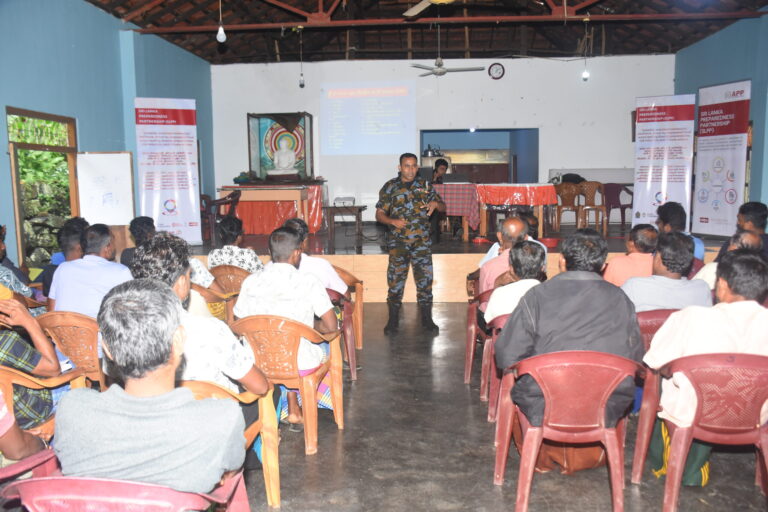
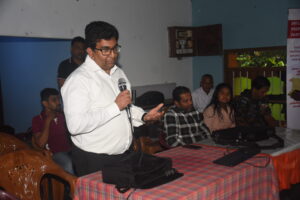
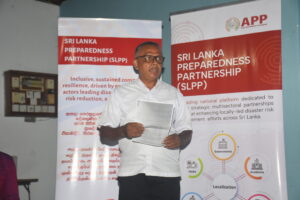
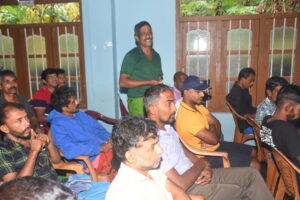
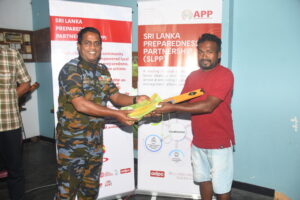
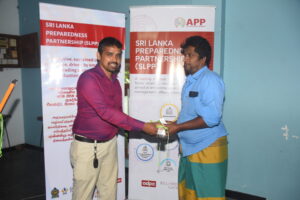
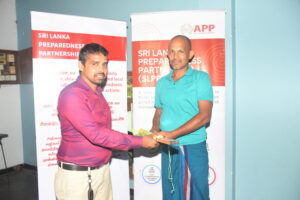
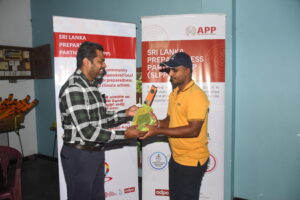
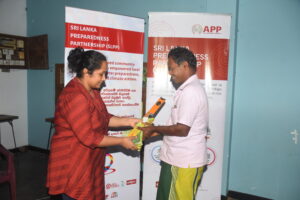
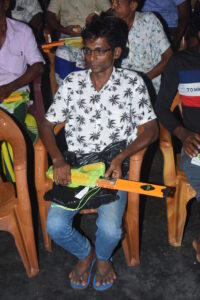
A capacity-building workshop for local masons was successfully conducted on 27 November 2025 at Siththamgallena Rajamaha Viharaya, Walasmulla, under the project “Building Resilient Communities through Locally Led Disaster Risk Management Initiatives.” The project is implemented by the Sri Lanka Preparedness Partnership (SLPP) with financial support from the Asian Disaster Readiness Fund (ADRF).
The workshop focused on strengthening the technical knowledge and practical skills of masons in disaster-resilient design and construction, with particular emphasis on landslide-prone areas within the Walasmulla Divisional Secretariat Division of the Hambantota District. Key technical areas covered included safe site selection, foundation techniques, slope stabilization measures, appropriate use of construction materials, and the integration of disaster-resilient features into housing structures.
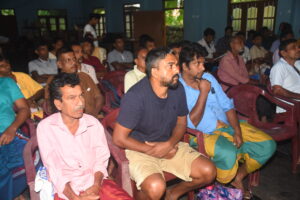
The programme was designed to equip masons with practical methods that can be directly applied in both new construction and renovation activities in high-risk locations, thereby promoting community safety through improved building practices. A total of 49 masons, including two women, participated in the workshop, representing high-risk areas such as Saputhanthri Kanda, Rammale, Thalapath Kanda, Dehigahahena, and Pathegama.
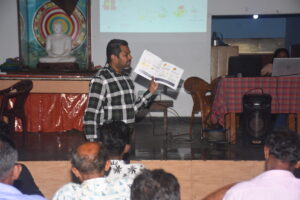
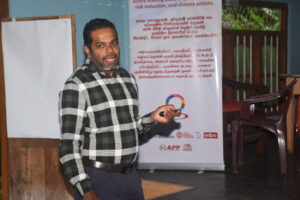
Technical facilitation was led by the National Building Research Organisation (NBRO), with support from the District Disaster Management Coordination Unit (DDMCU) – Hambantota and the National Disaster Relief Services Centre (NDRSC). Expert sessions covered landslide risk identification, resilient housing design, construction techniques, and relevant policy and technical guidelines. Participants actively engaged in hands-on exercises and interactive discussions, reinforcing learning through practical application.
Conducted in alignment with NBRO’s Community-Based Landslide Risk Management (CBLRM) approach, the full-day programme strengthened local technical capacity, enhanced institutional–community collaboration, and supported locally led disaster risk reduction efforts in the Walasmulla Divisional Secretariat Division.
By equipping local masons with the skills and knowledge to implement disaster-resilient construction practices, the workshop contributed to reducing structural vulnerability, promoting safer housing, and strengthening community resilience in landslide-prone settlements.