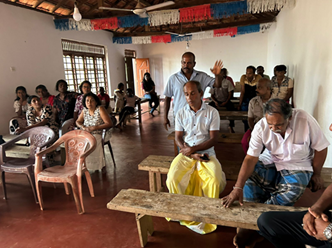
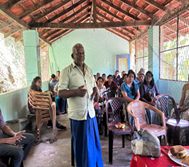
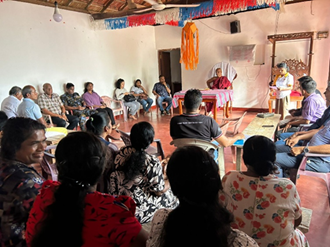
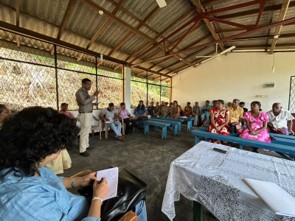
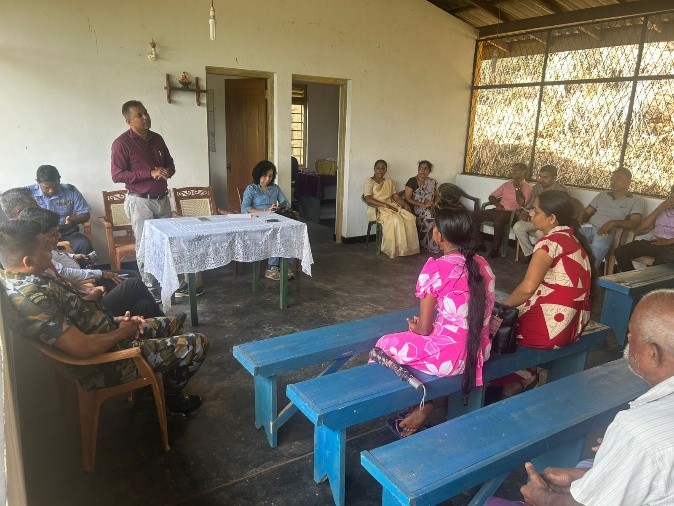
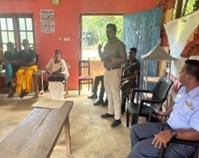
As part of the project “Building Resilient Communities through Locally Led Disaster Risk Management Initiatives,” implemented under the Asian Disaster Readiness Fund (ADRF) – Pillar I by the Sri Lanka Preparedness Partnership (SLPP), a series of community meetings were conducted in the Walasmulla Divisional Secretariat Division, followed by a formal briefing to the Divisional Secretary – Walasmulla.
The project focuses on strengthening forecast-based, locally led early warning and early action systems, ensuring that disaster risk reduction measures effectively reach at-risk, last-mile communities through inclusive and participatory approaches.
Community Meetings: Listening to Local Voices
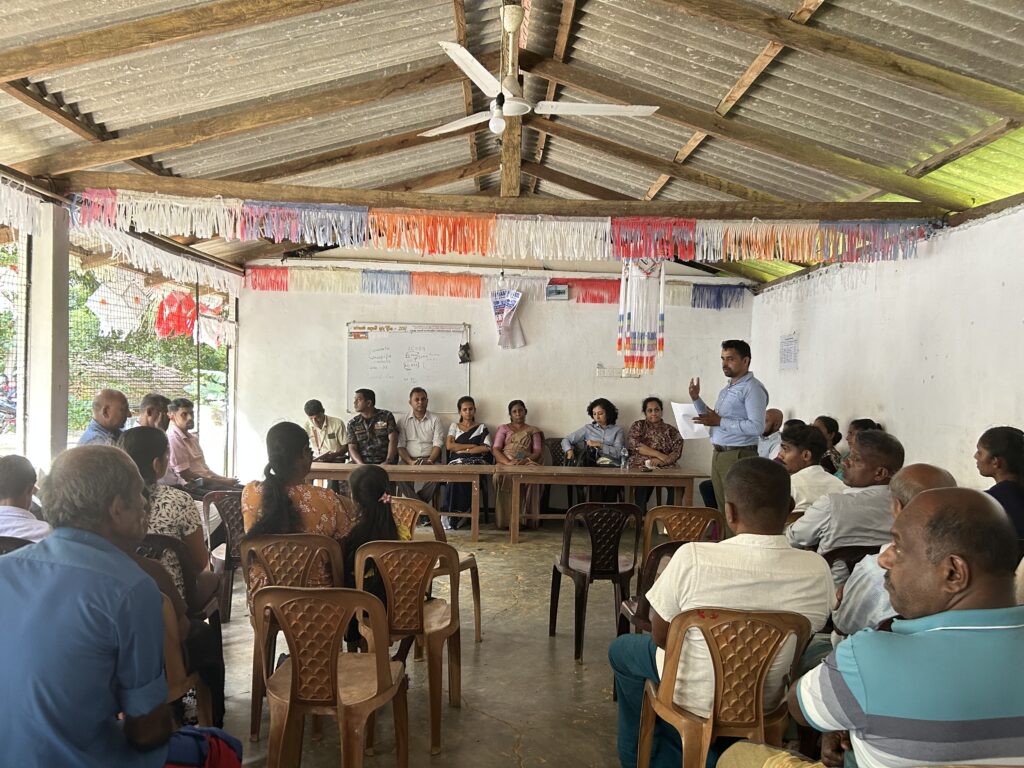
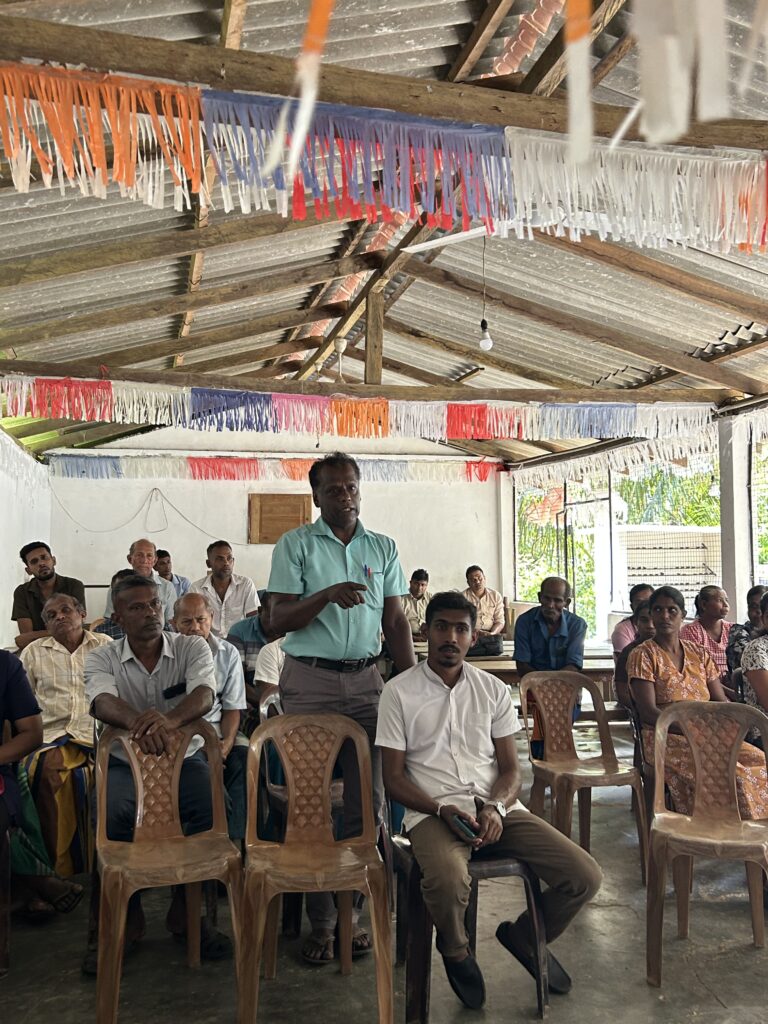
Community meetings were held in identified high-risk areas within the Walasmulla DS Division to engage residents, community leaders, and vulnerable groups in discussions on local hazards, risk perceptions, and preparedness gaps. These meetings provided a platform for communities to share experiences related to landslides, intense rainfall, lightning incidents, fire hazards, and electrical risks, and to highlight challenges faced during previous emergencies.
Participants emphasized the need for:
Timely and locally accessible early warnings
Clear roles and responsibilities at the community level during emergencies
Practical awareness on safe construction practices, lightning safety, and electrical hazard prevention
Inclusion of high-risk occupational groups such as tree cutters, carpentry workshop workers, and daily wage laborers in preparedness initiatives
The discussions also supported the formation of Landslide Risk Monitoring Committees (LRMCs) and helped identify community members willing to take leadership roles in monitoring risks and disseminating early warnings.
Consolidating Findings and Local Priorities
Insights gathered from community meetings, combined with observations from field visits to Dehigahahena and Saputhanthrikanda, were consolidated to inform project planning. Priority interventions identified included:
Installation of community-monitored rain gauges and manual bell-based early warning systems
Development and validation of Standard Operating Procedures (SOPs) through simulation exercises
Targeted awareness programmes for communities and school children
Training for masons on disaster-resilient construction techniques
Integration of awareness on fire safety, electrical hazards, and lightning risks
These findings ensured that proposed interventions are rooted in community-identified needs and aligned with local risk contexts.
Briefing to the Divisional Secretary – Walasmulla
A formal briefing was conducted with the Divisional Secretary – Walasmulla to present the consolidated findings from community meetings and field assessments. The briefing highlighted key risk areas, community priorities, and proposed interventions under the project, emphasizing the importance of institutional coordination and alignment with divisional disaster management mechanisms.
The Divisional Secretary acknowledged the value of the community-driven approach and reiterated the importance of strengthening coordination among government institutions, community groups, and technical agencies to enhance preparedness and response capacities within the division.
Moving Forward with a Locally Led Approach
The combined community engagement and institutional briefing reinforced the project’s commitment to locally led disaster risk management, ensuring that early warning and early action systems in Walasmulla are inclusive, practical, and sustainable. The collaborative process has laid a strong foundation for the effective implementation of upcoming interventions, with continued support from the Divisional Secretariat and active participation from communities.