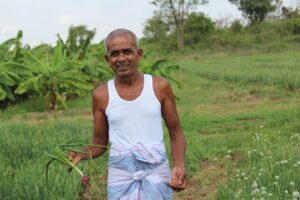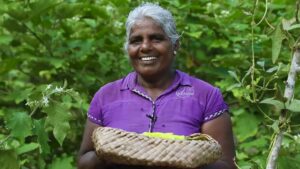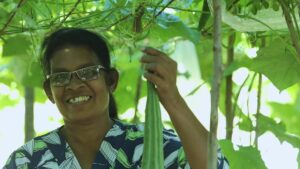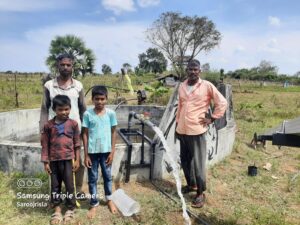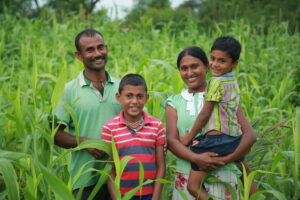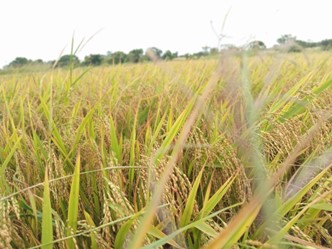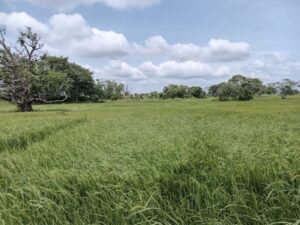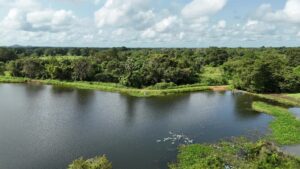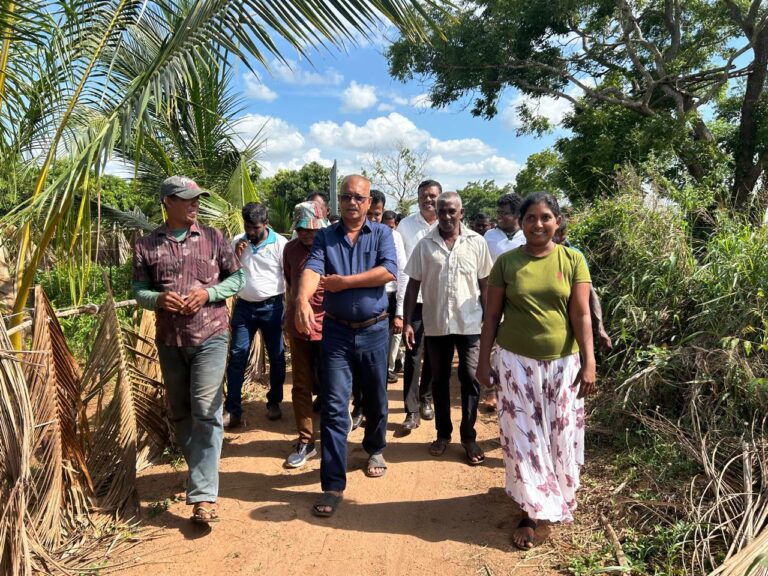
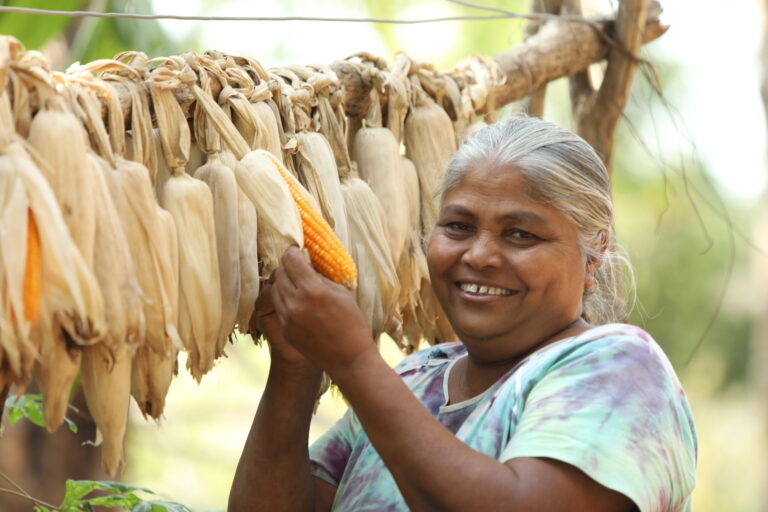
The Climate Resilient Integrated Water Management Project (CRIWMP) has reached a major milestone in Anuradhapura and Trincomalee, demonstrating how coordinated action, community engagement, and local innovation can build resilience across Sri Lanka’s dry zone. As a key implementing partner, Janathakshan proudly played a central role in carrying the project from concept to on-ground transformation, strengthening livelihoods, restoring water ecosystems, and empowering smallholder farmers to face climate uncertainty with confidence.
Supported through a USD 52.08 million co-financing commitment from the Government of Sri Lanka and the Green Climate Fund, and facilitated by UNDP, CRIWMP aimed to improve adaptation capacity among farmers, particularly women, across water-scarce and climate-vulnerable regions.
Anuradhapura served as one of the project’s major focus districts, with interventions implemented in Palugaswewa, Mihintale, Horowpathana, Medawachchiya, and Galenbindunuwewa DS divisions and Morawa, Gomarankadawala, Kuchchaweli, Kanthale, Mollipathana, Thambalagamuwa, Padavisripura DS divisions in Trincomalee district.
Through these efforts, CRIWMP has not only improved water governance and access but has also strengthened local-level disaster preparedness, food security, health, and socio-economic stability.
At every stage of the project, Janathakshan played a vital coordination and implementation role, working tirelessly with partner ministries, provincial authorities, and grassroots institutions. This required navigating technical, social, cultural, and logistical challenges, while ensuring that community voices, women’s needs, and local ecological realities guided the work.
From field mobilization to technical demonstrations, documentation, stakeholder convening, awareness programs, and household-level interventions, Janathakshan’s team ensured that the project outcomes remained meaningful and sustainable for beneficiaries.
Key Achievements at a Glance
Water & Irrigation Development
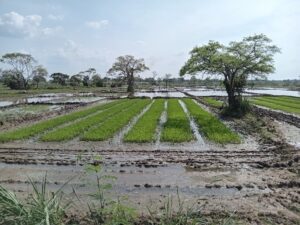
– Rehabilitation of 149 tanks and 17 anicuts
– Downstream improvements across 157 irrigation systems
– Ecosystem restoration, hydrological assessments, and watershed rehabilitation
– Provision of maintenance machinery to farmer organizations
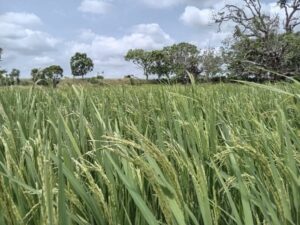
These efforts improved agricultural stability and secured water availability during unpredictable climatic cycles.
Climate-Smart Agriculture
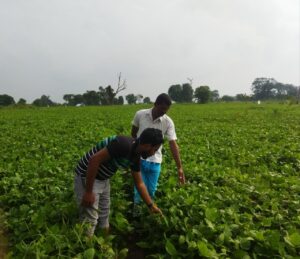
Climate-resilient agricultural practices and adaptive technologies were introduced, including:
✓ Micro water supply units (438)
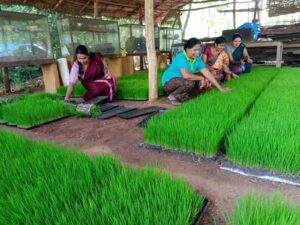
✓ Commercial cultivation units (28)
✓ Solar-powered irrigation pumps
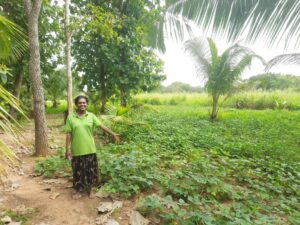
✓ Home gardening & food production programs
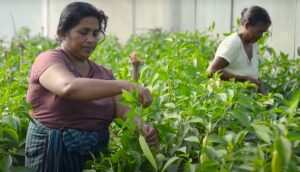
✓ Women’s entrepreneurship development
These initiatives empowered farming households, especially women, to diversify income and reduce climate-induced risks.
Safe Drinking Water Access
Community and institutional water needs were strengthened through:
✓ Rainwater harvesting units (315)
✓ Major pipeline extensions benefiting ~1,800 households
✓ Filtration systems for schools & hospitals
✓ Solar-powered support for water purification
Disaster Risk Management
To improve climate preparedness and disaster forecasting, CRIWMP introduced:
✓ Local disaster preparedness plans across 14 DS divisions
✓ Automatic river gauging and agro-weather monitoring stations
✓ Smart boards, laptops, and communication equipment
These tools will support long-term institutional readiness and community safety.
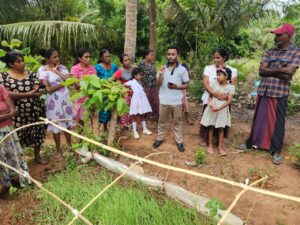
At the heart of the CRIWMP’s success is its people-centered approach. Janathakshan’s field teams worked extensively with farmers, women’s groups, youth, rural organizations, government officers, and water user associations, ensuring that interventions were not just technically sound, but socially accepted and locally owned.
The project also helped revive indigenous knowledge, strengthen collective water management culture, and reinforce traditional tank-based ecosystems, elements historically vital to dry-zone survival.
This milestone represents more than infrastructure, training, or technology. It reflects the dedication and passion of Janathakshan’s team, led by the Project Manager, Mr. Thilak Wickramasinghe, project coordinators, field officers, technical specialists, administrative staff, and volunteers, who worked through droughts, floods, harvest seasons, bureaucratic complexities, and logistical realities to ensure real impact on the ground.
Their hard work, patience, and commitment have translated into outcomes that will continue benefiting communities long after the project period.
Janathakshan extends warm appreciation to:
– Government Ministries & Authorities
– UNDP & Donor Partners
– Provincial & District Administrations
– Irrigation and Agriculture Departments
– Disaster Management Agencies
– Local Government Institutions
– Farmer Organizations & Community Leaders
– Schools, Hospitals, and Resource Centers
This effort proved that climate resilience is best achieved not through isolated action, but through meaningful partnership and collective responsibility.
The success of CRIWMP in Anuradhapura demonstrates a replicable model for climate adaptation across Sri Lanka’s dry zone. Lessons learned from implementation will continue to guide future initiatives on integrated water management, drought resilience, and pro-community climate action.
As Janathakshan celebrates this achievement, the organization remains committed to advancing sustainable development, nurturing ecological balance, and strengthening communities against the challenges of a changing climate.