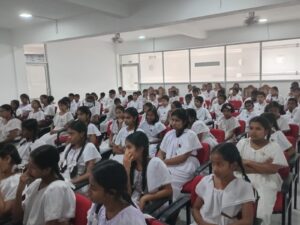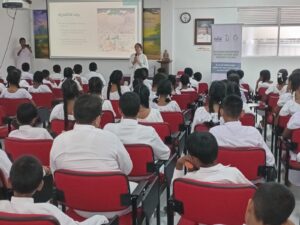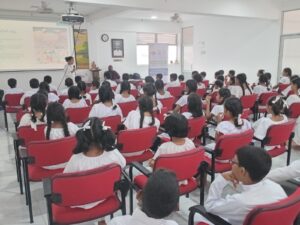
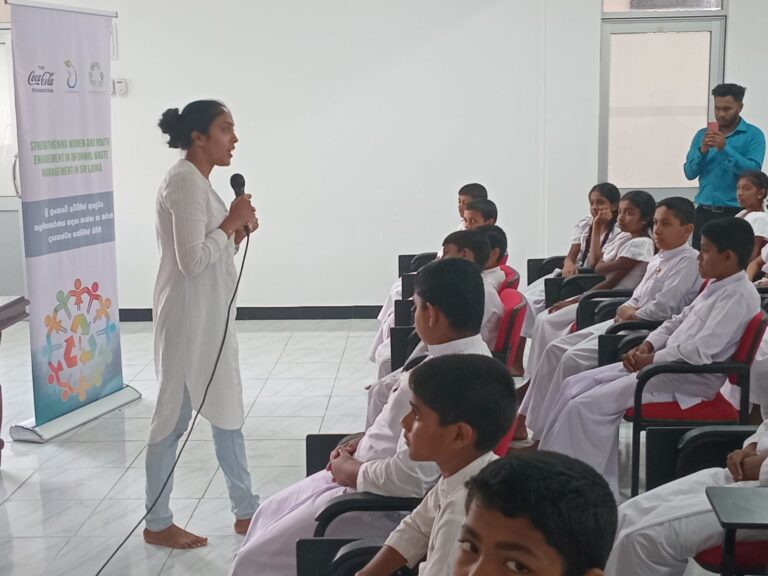
As part of the Strengthening Women and Youth Engagement in Informal Waste Management in Sri Lanka (SWYFT) project, a Sinhala-medium Dhamma School awareness programme on responsible waste management was successfully conducted on 08 February 2026 at Subodharama Temple, with the participation of Dhamma School students.
The session was conducted by Ms. Deepthi Jayakodi behalf of Neptune Recyclers, with the objective of promoting environmentally responsible attitudes among children and encouraging the adoption of sustainable waste management practices from an early age. This programme was organized as a follow-up to the previously conducted English-medium awareness session, ensuring inclusivity and equal access to environmental education for all students.
During the session, students were introduced to the fundamentals of responsible waste management, with particular emphasis on the 3R principles, Reduce, Reuse, and Recycle. The programme explained the negative impacts of improper waste disposal on the environment, water bodies, and public health, while highlighting simple actions students can take in their daily lives to reduce waste generation.
Special focus was given to plastic waste, helping students understand how mismanaged plastics contribute to environmental pollution and how proper waste separation can support recycling processes and circular economy initiatives. Students were encouraged to practice waste segregation at household level and to serve as positive influencers within their families and communities.
The interactive format of the programme enabled students to actively participate through discussions, questions, and sharing personal experiences related to waste management and cleanliness. By connecting environmental responsibility with Dhamma values, such as mindfulness, compassion, responsibility, and respect for all living beings, the session reinforced the idea that protecting the environment is a shared moral responsibility.
In line with the awareness activities, the SWYFT project team reiterated plans to install a waste bin at the Dhamma School, further supporting proper waste segregation and reinforcing daily waste management practices among students.
This Sinhala-medium awareness programme forms part of SWYFT’s wider commitment to community- and school-based awareness raising, aimed at fostering long-term behavioural change and strengthening a culture of sustainable waste management. By empowering children with knowledge and values in their own language, the project continues to contribute to building a more environmentally conscious and responsible future generation.
The SWYFT project will continue to conduct similar awareness programmes across its target districts, strengthening community engagement while promoting inclusive, sustainable, and people-centred waste management solutions across Sri Lanka.