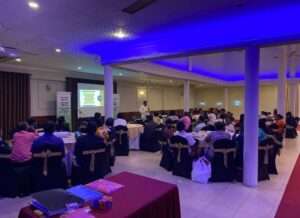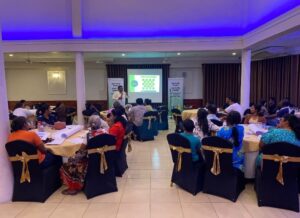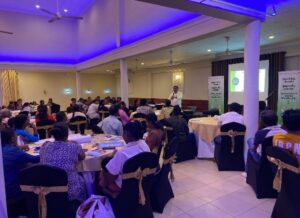
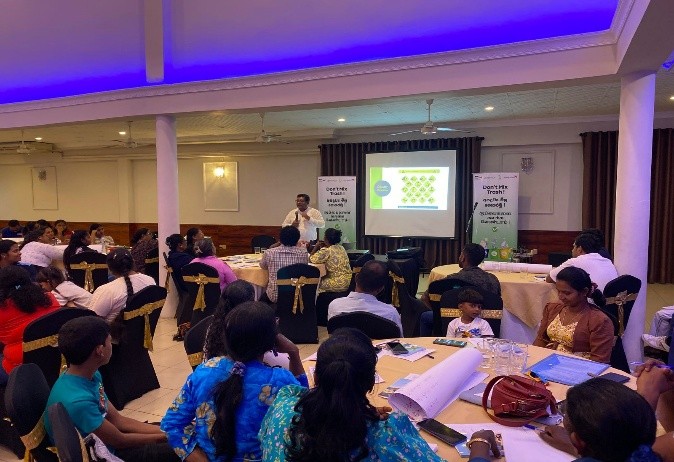
The recent Ditwah Cyclone caused significant damage to communities in Wattala and Ja-Ela, with severe flooding affecting livelihoods, infrastructure, and daily life. The situation revealed critical gaps in preparedness among Resource Collectors(RCs), highlighting the urgent need to strengthen community-level disaster readiness.
In response, Janathakshan, under the PHINLA II Project co-funded by the German Corporation BMZ and World Vision Germany and implemented in partnership with World Vision Lanka, successfully conducted disaster awareness and preparedness workshops for Resource Collectors in Ja Ela and Wattala respectively on 15th December 2025 and 17th December 2025.
These workshops were designed to enhance the capacity of RCs and local communities to better understand, prepare for, and respond to flood-related disasters.
The programme began with an interactive session where participants shared their personal experiences of heavy rain and flooding. This created a space for reflection and helped build a shared understanding of the challenges faced by the communities.
Participants then engaged in the “Our Local Disaster Profile” session, where they collaboratively mapped historical flood events, identified flood-prone areas, and discussed early warning signs and associated risks specific to Wattala and Ja-Ela. This exercise enabled communities to connect past experiences with present vulnerabilities.
The second session focused on the science and systems behind disasters, providing insights into the causes of flooding in the area, the influence of climate change, and the functioning of official disaster management mechanisms. Participants were introduced to early warning systems and the disaster management cycle, bridging the gap between community knowledge and institutional frameworks.
A key highlight of the programme was the “Household and Family Preparedness Drill”, where participants worked together to develop practical emergency kits and family-level action plans. This hands-on session equipped them with tangible tools to respond effectively during emergencies.
The final session, “Plan to Action,” emphasized adaptive strategies for safeguarding livelihoods and health, while also supporting the formation of Community Resilience Committees in both Wattala and Ja-Ela. These committees will play a crucial role in sustaining preparedness efforts at the local level.
The workshops were highly appreciated by participants, particularly as they addressed immediate needs following the Ditwah Cyclone. By strengthening awareness, preparedness, and community coordination, this initiative marks an important step towards building resilient communities capable of facing future climate-related challenges.