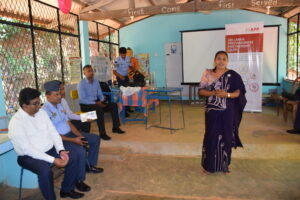
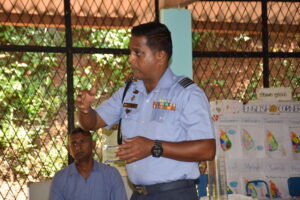
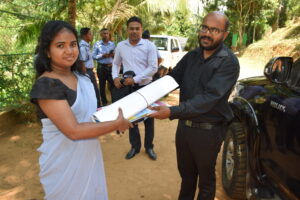
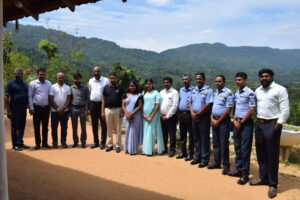
Under the Asian Disaster Readiness Fund (ADRF) – Pillar I Project, the School Awareness Programme on Landslide Risk and Preparedness was successfully launched on 09 February 2026 in the Walasmulla Divisional Secretariat Division of the Hambantota District.
Implemented under Output 1.2: Enhanced community awareness on landslide risk and preparedness, this programme marked the commencement of a series of school-based awareness sessions aimed at strengthening disaster preparedness among vulnerable communities.
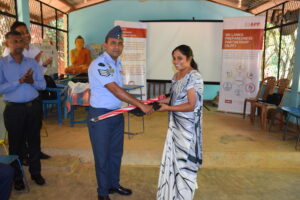
The programme was carried out through the Sri Lanka Preparedness Partnership (SLPP), with technical support from the District Disaster Management Coordinating Unit (DDMCU) – Hambantota and the Human Settlements Planning & Training Division of the National Building Research Organisation (NBRO). Coordination was provided by the Zonal Education Department of Walasmulla DSD and the Walasmulla Divisional Secretariat.
Programme Locations
The Day 01 sessions were conducted at:
- Handugala Maha Vidyalaya
- Thalpath Kanda Kanitu Vidyalaya
Sessions were held from 8.30 a.m. to 1.30 p.m., with parallel implementation in both schools. Two technical teams, together with project staff, facilitated the sessions simultaneously to ensure effective outreach.
Building Awareness Among Students, Teachers, and Parents
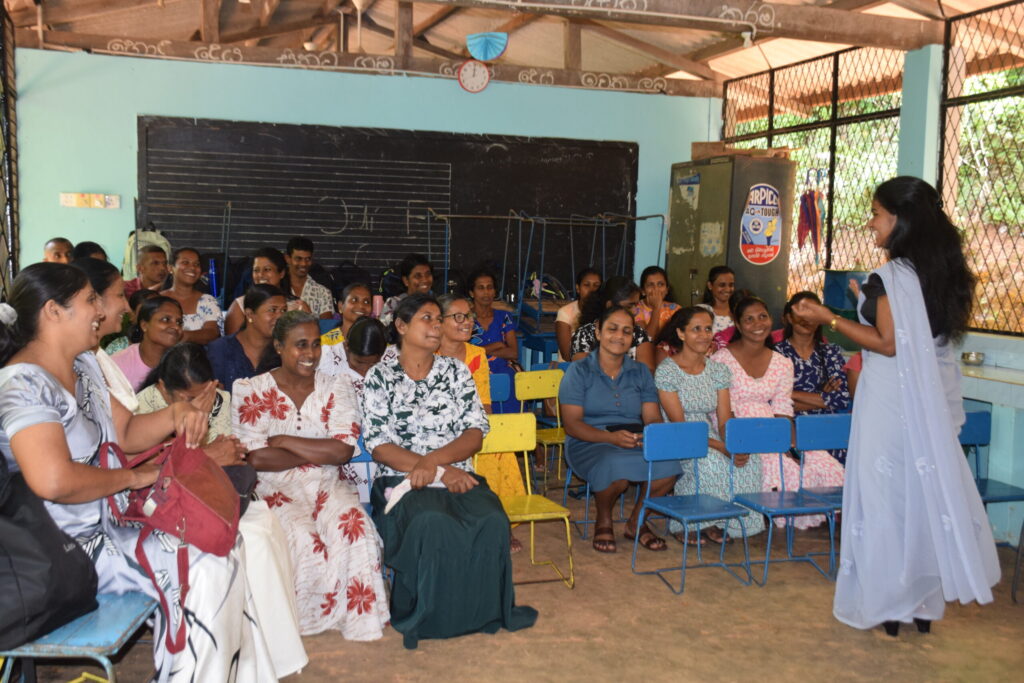
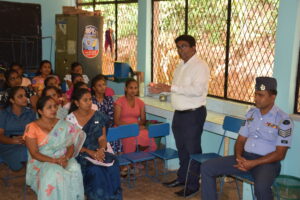
The programme began with interactive sessions for school children, followed by dedicated awareness sessions for teachers and parents, ensuring a comprehensive and inclusive approach to disaster preparedness.
Facilitators from the Disaster Management Centre (DMC) and the National Building Research Organisation (NBRO) covered key topics including:
- Causes and early warning signs of landslides
- Safe evacuation routes
- Emergency response procedures
- Understanding early warning systems and community preparedness
Through interactive discussions and practical demonstrations, students gained valuable knowledge on identifying landslide risks and responding safely during emergencies.
Following the student sessions, awareness was extended to teachers and parents, with a strong emphasis on recognizing and responding to early warning signs observed by children. Participants were encouraged not to overlook students’ observations of environmental changes, as these can serve as important indicators of potential landslide risks.
Strengthening Community Preparedness
This integrated approach strengthened awareness and preparedness at school, household, and community levels, contributing to building a more resilient Walasmulla community.
The successful implementation of Day 01 marked an important step in enhancing disaster risk awareness among school communities in landslide-prone areas.