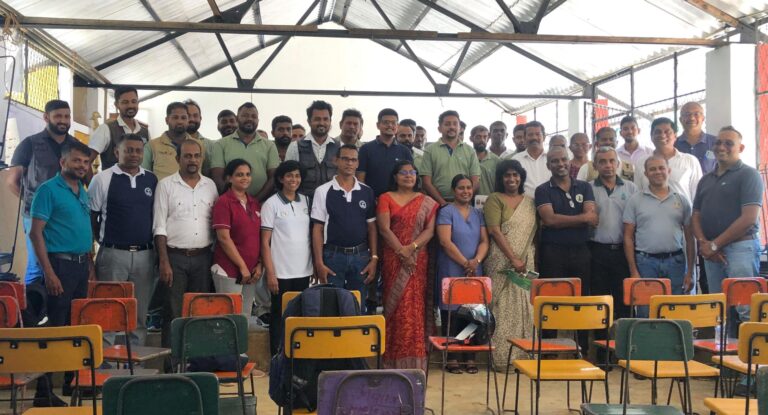
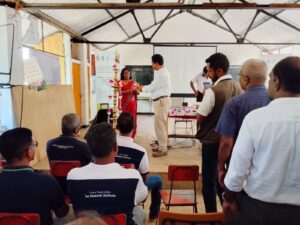
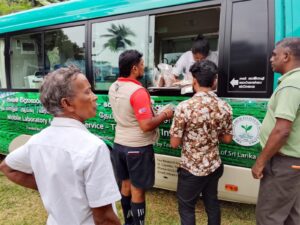
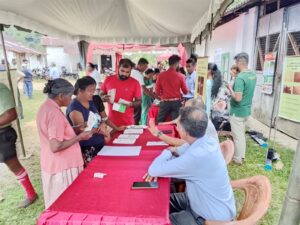
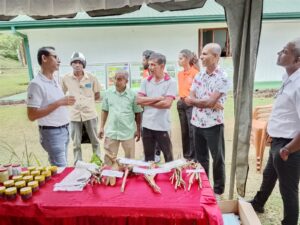
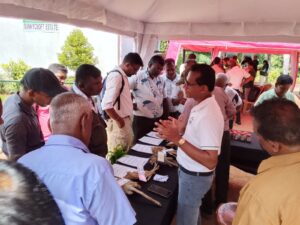
A Mobile Land Clinic on Tea, Rubber, and Cinnamon was successfully conducted on 02nd and 03rd April 2026 at the Vincit Miyanavita, Densworth, and Dewalakanda Estates in the Kegalle District, under the GEF-7 Project – Partnerships and Innovative Financing to Mainstream Biodiversity and Sustainable Land Management in Sri Lanka’s Wet Zone.
The programme brought together technical expertise from key institutions, including the Tea Research Institute (TRI), Tea Small Holdings Development Authority (TSHDA), Rubber Research Institute (RRI), National Rubber Master Plan Management Unit (NRMC), National Cinnamon Research and Training Centre (NCRTC), and the Rubber Development Department (RDD).
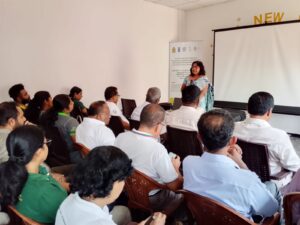
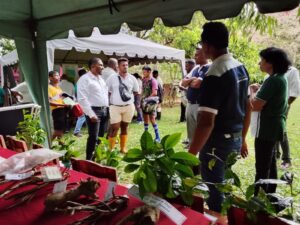
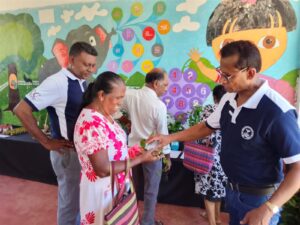
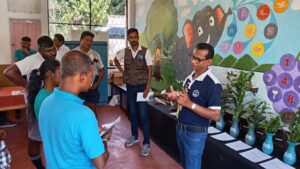
The Mobile Land Clinic served as a practical platform for estate communities and smallholders to engage directly with technical officers and experts. During the sessions, participants were able to identify and discuss key challenges related to tea, rubber, and cinnamon cultivation.
Expert guidance was provided on a range of critical areas, including soil conservation practices, fertilizer application, soil testing methods, soil quality improvement, pest and disease management, and other essential technical interventions required to enhance productivity and sustainability.
The programme emphasized the importance of sustainable land management (SLM) and biodiversity conservation practices within plantation landscapes, aligning with the broader objectives of the GEF-7 project to promote environmentally sustainable and climate-resilient agricultural systems.
The sessions were conducted with active participation, knowledge exchange, and practical engagement, enabling participants to gain valuable insights and technical solutions tailored to their local contexts.
This initiative highlights the importance of multi-stakeholder collaboration in strengthening the plantation sector while ensuring long-term environmental sustainability and improved livelihoods for communities in the wet zone.